
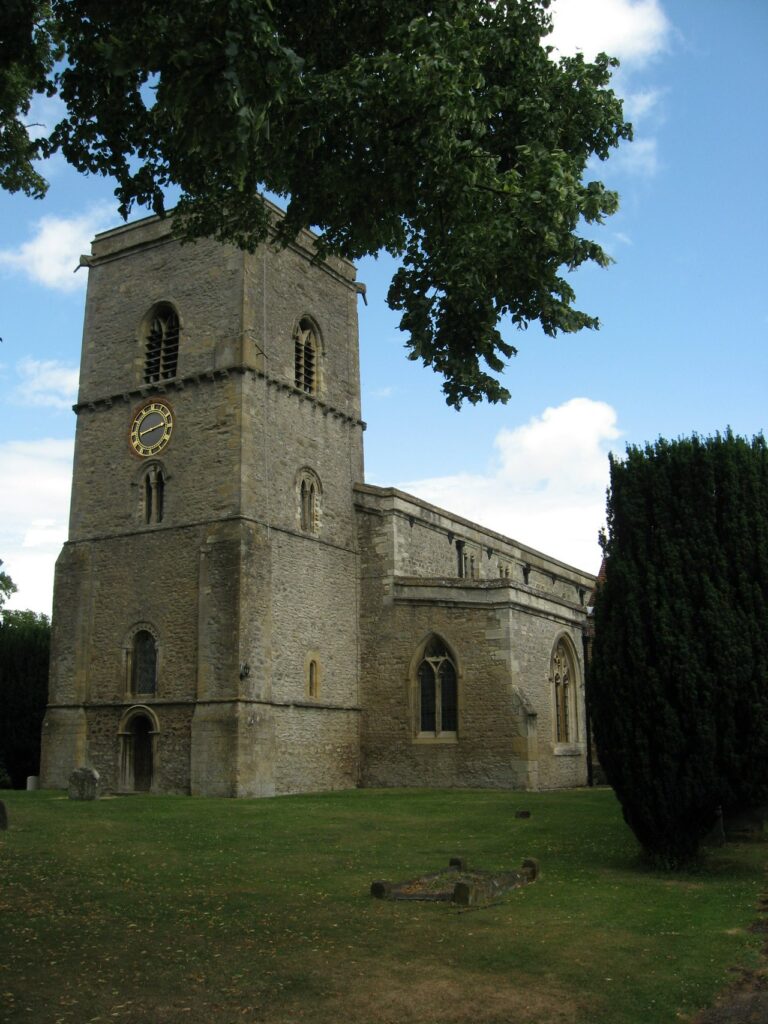
Nearly every village has one, some older than others. For hundreds of years, the stone-built church has been a feature of the rural community. It’s the place where the milestones of life are marked: christenings of new babies, marriages of both younger and older couples, and farewells to loved ones, many of whom now lie in the churchyard.
Scotland, Northern Ireland, and Wales have their own distinctive kirks and chapels, but the church in today’s picture is quintessentially English. A simple stone building, it stands in a grassed churchyard surrounded by trees. Its tower contains bells, which are still rung, although maybe just on special occasions. Wherever you travel in England, the traditional parish church architecture will always be there to enjoy.
Fun fact: There are over 16,000 parish church buildings in England, with 12,500 of them registered as listed buildings by Historic England. (Thanks to churchofengland.org for this info.)
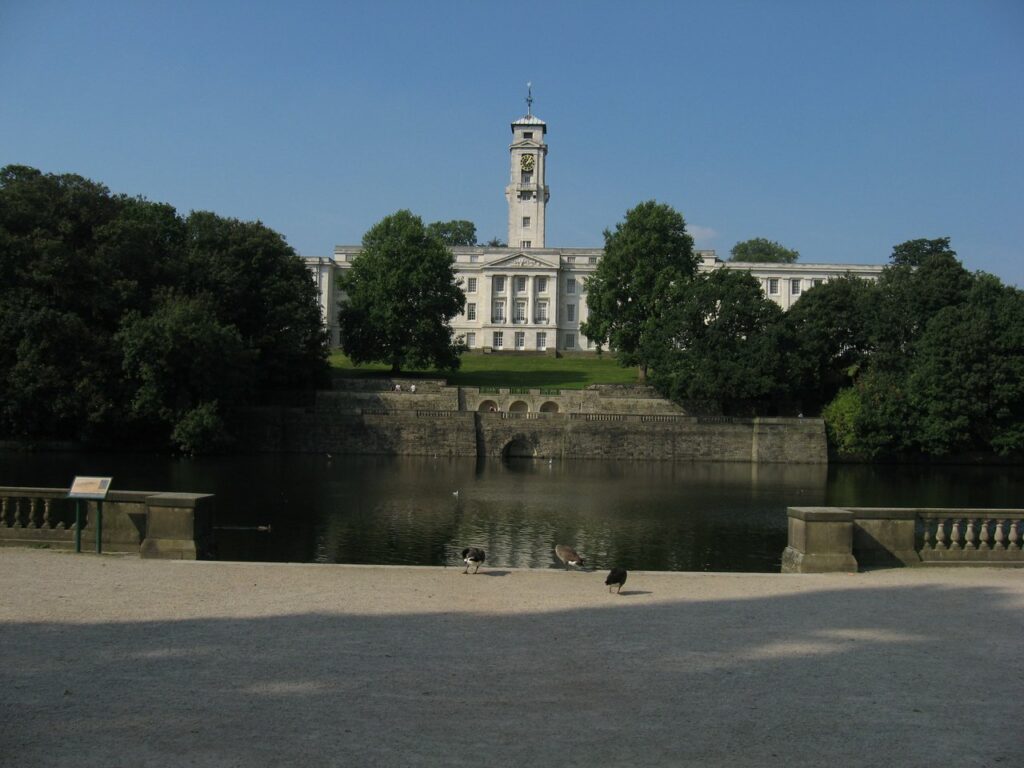
Once upon a time, many years ago, I studied modern languages in this beautiful building at the University of Nottingham.
University College Nottingham was founded in 1881, but it wasn’t until 1928 that it moved from its cramped facilities in the city centre to a spacious new campus in the southwest of the city. At that time, the Trent Building formed the entirety of the university’s academic and administrative accommodation.
Sir Jesse Boot (founder of Boots the Chemist) and the other benefactors of the new university campus didn’t only wish to see an excellent academic facility on the site, their desire was also for the surrounding land to be enjoyed by the wider public. To that end, the lake and gardens were developed and have always been a popular place to walk on a sunny day, for students and local residents alike.
The combination of lake, gardens, and beautiful architecture makes for a stunning university campus, and I have to say, that played a significant part in my decision to accept the offer of a place to study there.
Fun facts: Over the years, the Trent Building has seen many notable and famous people step inside it, the first of whom were King George V and Queen Mary, who officially opened the new university premises in 1928. Later their granddaughter Queen Elizabeth II also visited, and Albert Einstein, H.G. Wells, and Mahatma Gandhi are among those who have delivered lectures in the Great Hall. The writer D.H. Lawrence, who is strongly associated with the university and also studied there, apparently said that, in his opinion, the Trent Building looked like an “iced cake”.
Thanks to Wikipedia for some of the information above.
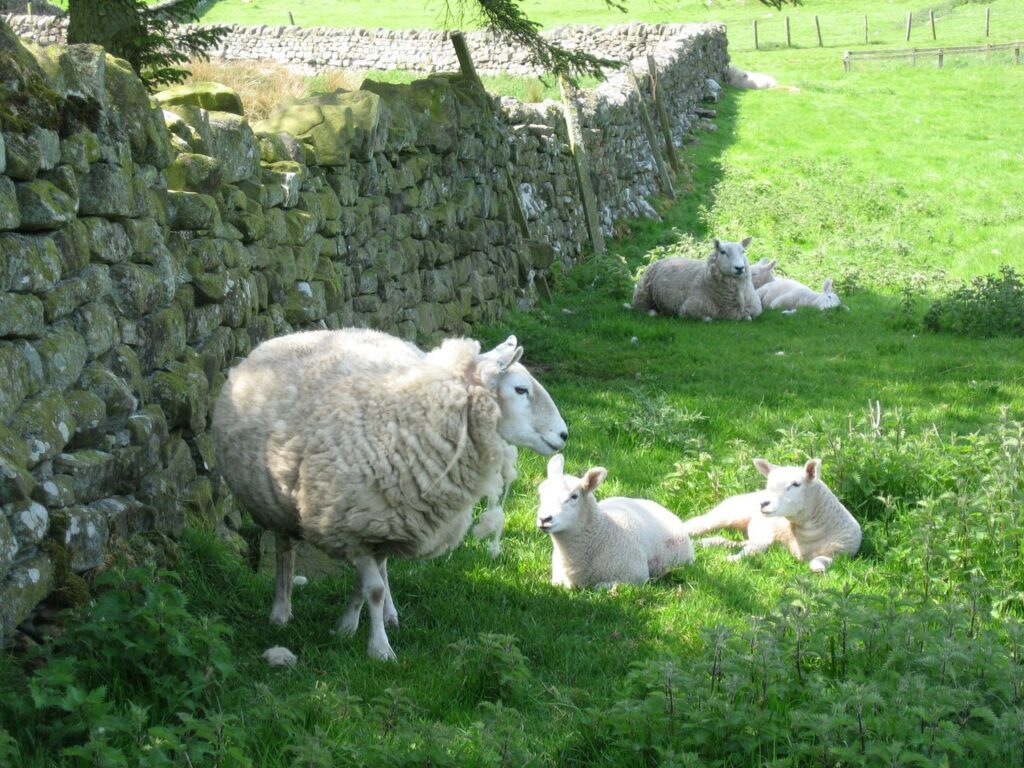
It’s Good Friday today, the Jewish Passover holiday is being celebrated this week, and we’re also well into lambing season in the UK, so what could be more appropriate than this idyllic spring picture of lambs with their mothers? Sheep farming has a long history in Britain, and fields of the woolly animals are a common sight in many parts of the country. From lowland farms to sheep roaming the hillsides in areas such as Wales, Cumbria, and Scotland, sheep are everywhere.
The animals are mainly bred for food these days, although their wool still needs to be sheared and is also sold, of course. Most of the lamb meat consumed in the UK is either British or New Zealand, with Welsh and Scotch varieties particularly prized for their fantastic flavour. Roasted until it’s pink and tender and then served with mint sauce, roast potatoes, vegetables, and gravy, lamb is a classic British Sunday lunch.
Fun fact: The National Sheep Association estimates that there are around 30 million of the woolly animals in the UK – that’s almost half the number of human residents of the country. In Northumberland, the county where I live, we have more sheep than people. So there’s something to bleat about!
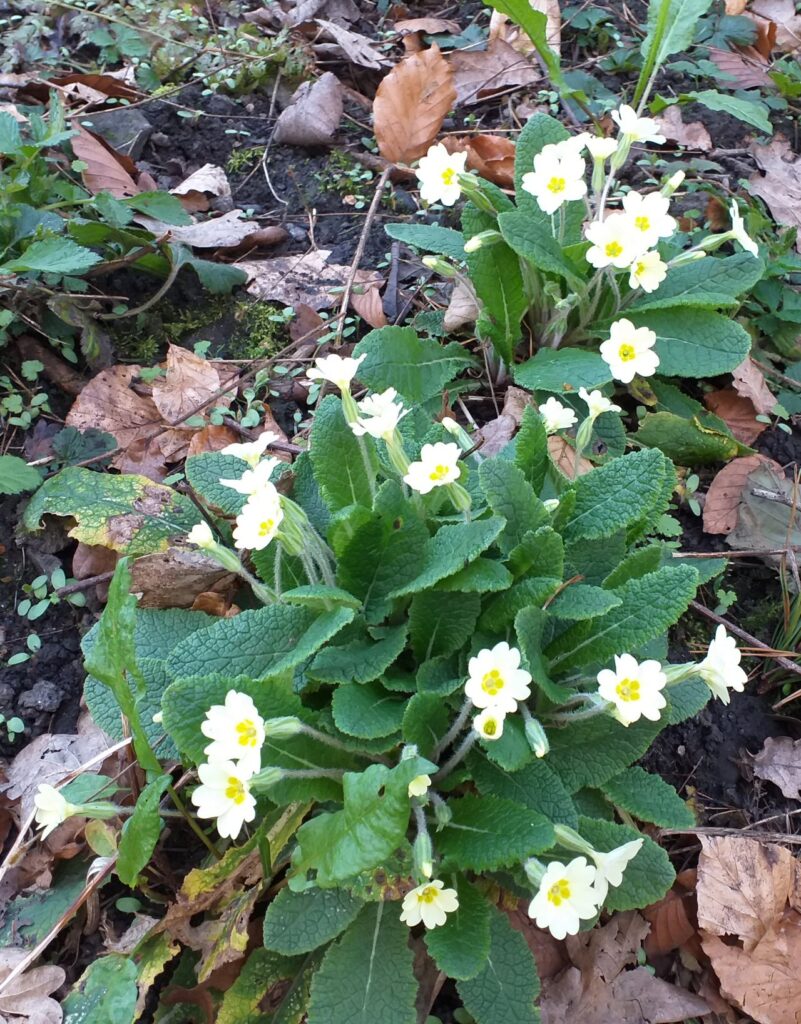
There is nothing that says that spring is here more than flowers bursting into bloom, and the primrose in today’s picture is one of the first wildflowers to appear. The name “primrose” even attests to this, as it’s derived from the Latin “prima rosa”, meaning “first rose”.
These pretty pale yellow flowers can be found at the base of hedgerows, as well as in grassland and woodland, and they’re a great source of nectar for butterflies. In the UK, in order to protect the species and preserve it in its natural habitat for the future, it’s illegal to pick the flowers or to remove the plants from the wild.
Fun fact: Primroses were the favourite flower of British prime minister Benjamin Disraeli, who served the country briefly in 1868 and then from 1874 to 1880. He and the reigning monarch, Queen Victoria, were close friends. Knowing that the primrose was his favourite flower, the Queen used to send Disraeli bunches of them from Windsor Castle and Osborne House, her residence on the Isle of Wight.
Disraeli died on 19 April 1881, and for the next forty or so years, the anniversary of his death was known as “Primrose Day”. On that day, his favourite flowers were laid on his grave in the churchyard at Hughenden, Buckinghamshire, and at the statue of him which stands in Parliament Square in London.
Thanks to the Woodland Trust and Wikipedia for some of the details above.
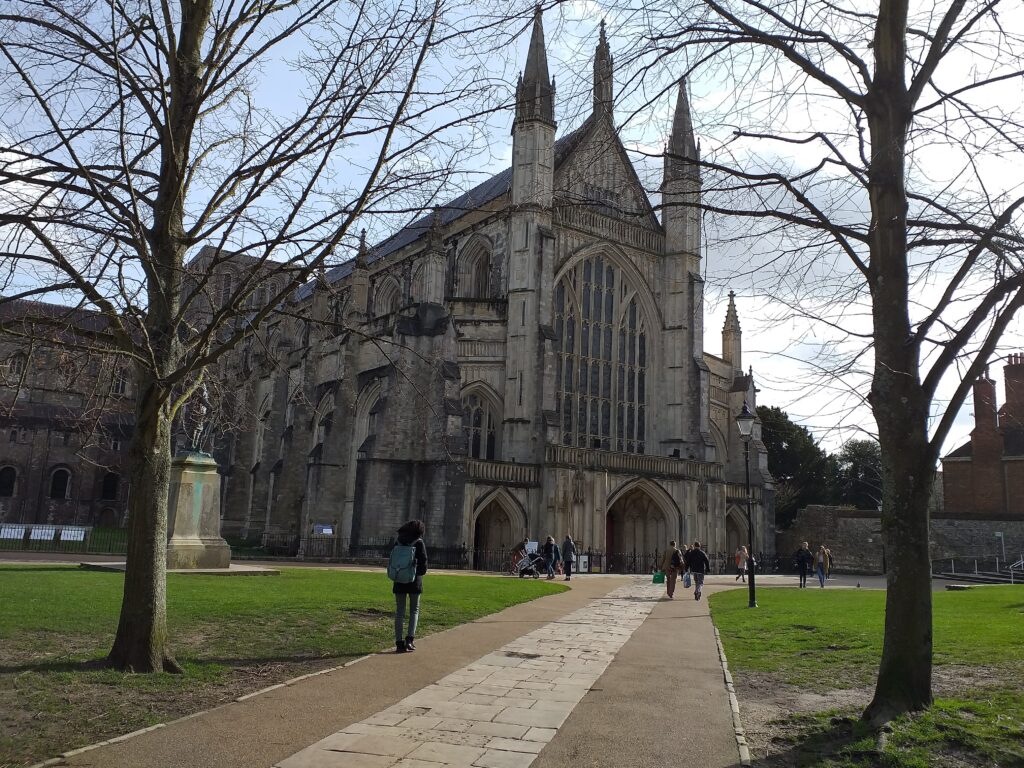
This week’s Beautiful Britain picture is of the majestic Winchester Cathedral, which is getting on for a millennium old. I grew up just outside the city so was used to seeing this impressive sight on a regular basis, but it’s only as an adult that I’ve really come to appreciate just how incredible this building is.
The cathedral is one of the oldest in the UK and was consecrated in 1093, less than thirty years after the Norman Conquest of William the Conqueror. At that time, the whole cathedral was only what is now the east end, but more sections have been added since, with the main construction work finishing in 1532.
From my childhood, I remember the celebrations in 1979 for the 900th anniversary of the beginning of the cathedral’s construction. A parade was held with people dressed as various historical figures associated with the cathedral. The only person I really remember from that parade was diver William Walker. Walker is a man we are deeply indebted to, as, in all likelihood, without his work, the cathedral would no longer be here for us to enjoy today.
By 1905, the building was in serious danger of collapse and was sinking into the ground, probably due to faults with the foundations. To cut a long and technical story short, William Walker, who was arguably the most experienced diver in the country at the time, arrived in Winchester on 5 April 1906, and for the next six years worked six or seven hours a day in the flooded trenches beneath the building, laying bags of cement to stop the water rising from below. Walker was later admitted as a Member of the Royal Victorian Order in recognition of his heroic work, and there is a statue in his memory in the cathedral. (You can find out more about this amazing story and the rest of the history of Winchester Cathedral here.)
So we have two Williams to thank for being able to enjoy this magnificent cathedral today: William the Conqueror for commissioning its construction nearly a thousand years ago, and William Walker for preserving it from collapse. Maybe we should now go and toast those two gentlemen at the William Walker pub just near the building in question.
Fun fact: A number of notable people have been buried in the cathedral over the centuries, but the most well known must be the novelist Jane Austen, who died in a house in College Street, just a stone’s throw away. At the time of her death, she wasn’t famous, but in the two hundred years since, she has risen up the rankings and is now one of the best-loved novelists of all time. Many people come to Winchester from all over the world to see her grave.
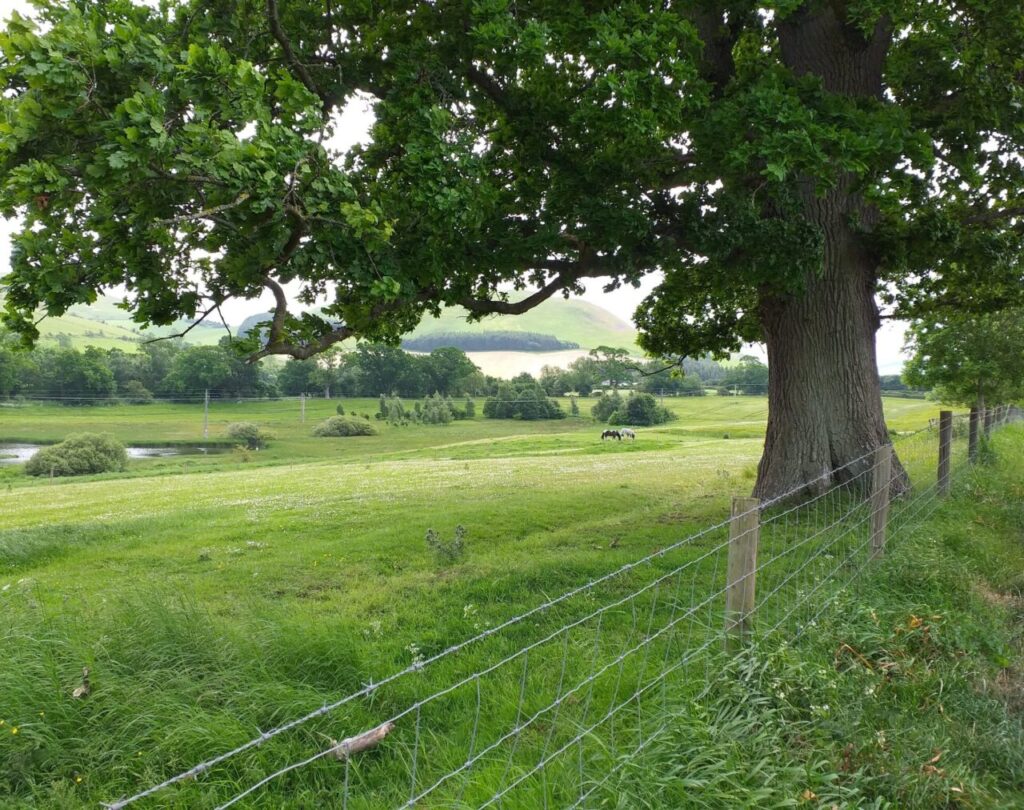
Britain is known for being very green, which is due to the country receiving quite a large amount of rain. However, all that rain does make for very beautiful, lush countryside, as demonstrated here in this picture from the lovely Scottish Borders region near Kelso. Green as far as the eye can see, a couple of horses contentedly grazing, a small pool of water, and all being watched over by a mighty oak tree. For me, this is the type of scene that really epitomizes beautiful Britain.
Fun fact: Oak trees can live for over 1,000 years, although a more usual lifespan would be 600 years. (Info from the Ancient Tree Inventory at the Woodland Trust.) The Major Oak in Sherwood Forest, associated with Robin Hood, is estimated to be between 800 and 1,100 years old! It’s such an elder statesman now that some of its limbs have to be propped up.
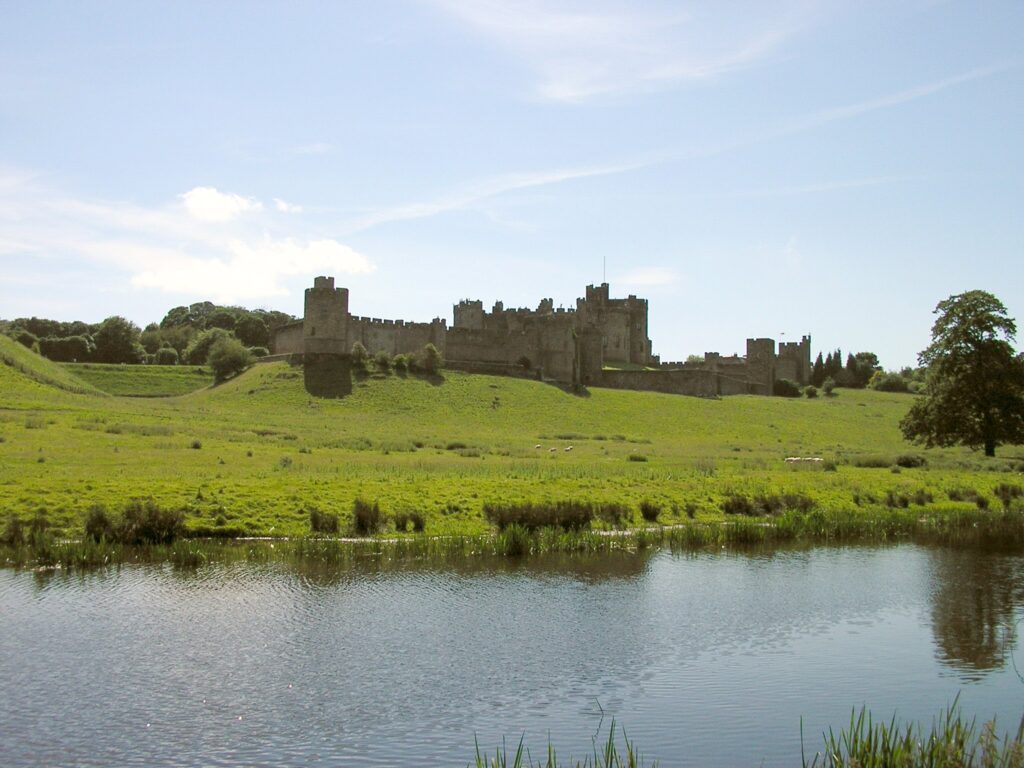
On the edge of the town of Alnwick, England’s second-most northerly town, situated in Northumberland, England’s most northerly county, a beautiful castle can be found. It’s been the home of the Percy family, the Dukes of Northumberland, since 1309, although its history dates from Norman times. (Handy dates and historical facts come from the castle’s website.) Some of the rooms are open to the public from Easter until October, and the castle attracts visitors from around the world. As I learned on my most recent visit, the land in front of it was developed by the famous landscape architect Capability Brown. He even diverted the course of the river to achieve the result he was looking for.
Fun fact: The castle has starred in various movies and TV productions over the years. Among other appearances, it featured as Nottingham Castle in Robin Hood: Prince of Thieves, as Brancaster Castle in Downton Abbey, and, most famously, as Hogwarts in the first two Harry Potter movies.