
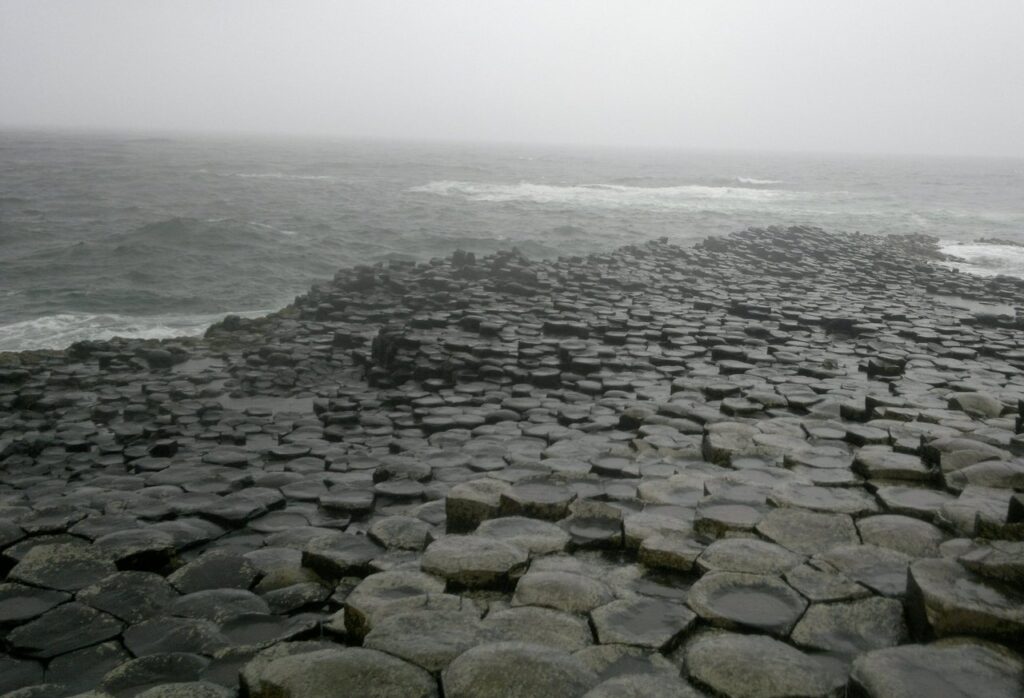
Legend has it that long ago, an Irish giant named Finn McCool built a causeway across the Irish Sea to Scotland so that he could accept the challenge of fighting Scottish giant Benandonner.
This fascinating natural phenomenon welcomes thousands of visitors every year and became a World Heritage Site in 1986. Whatever the weather, grey and rainy – as in our picture – or gloriously sunny, it never fails to impress, the giant legend adding an air of romance to its appeal.
Fun fact: The Giant’s Causeway is made up of around 40,000 interlocking basalt columns, most of which are hexagonal. They lead from the foot of the cliff and out to disappear under the sea, the highest columns measuring 12 metres (39 feet).
Thanks to Wikipedia for some of the information above.
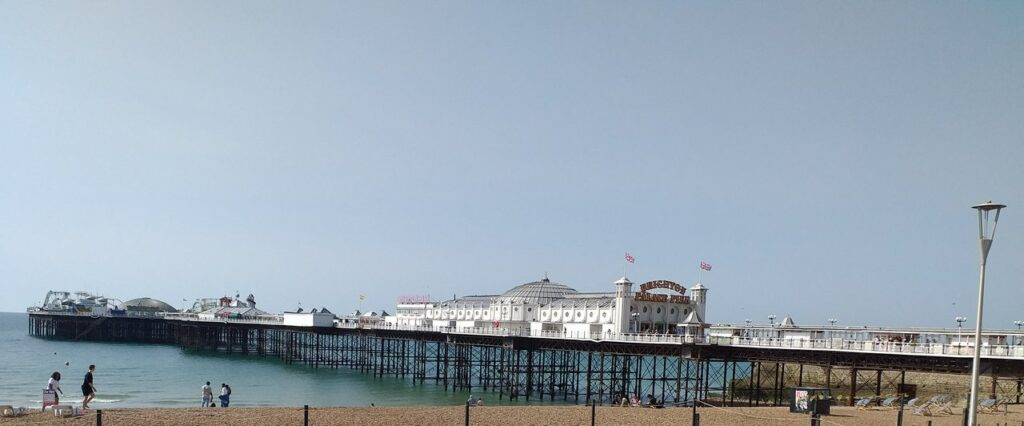
“Oh! I do like to be beside the seaside!” goes the well-known music hall song of a century ago. Seaside holidays and days out for all, including the working class, were becoming more popular and common, and the entertainment of the pier was very much part of that.
The pier as a place to promenade and take the sea air began to take off during Victorian times, but with more and more people travelling to the coast, eateries and entertainments were added to the magnificent structures jutting out into the sea. And later still, fairground rides also added to the experience. A trip to the pier could easily become a day out.
These days, the attraction of the pier has declined; however, there are still many wonderful examples of the structure around the country, such as the one at Brighton in our photo today.
Fun fact: Southend pier, stretching more than 2km into the Thames Estuary, is the longest pleasure pier in the world. Due to its length, it became the first pier to have its own railway, which opened in 1890, a year after the pier itself.
Thanks to historyhit.com for some of the information above.
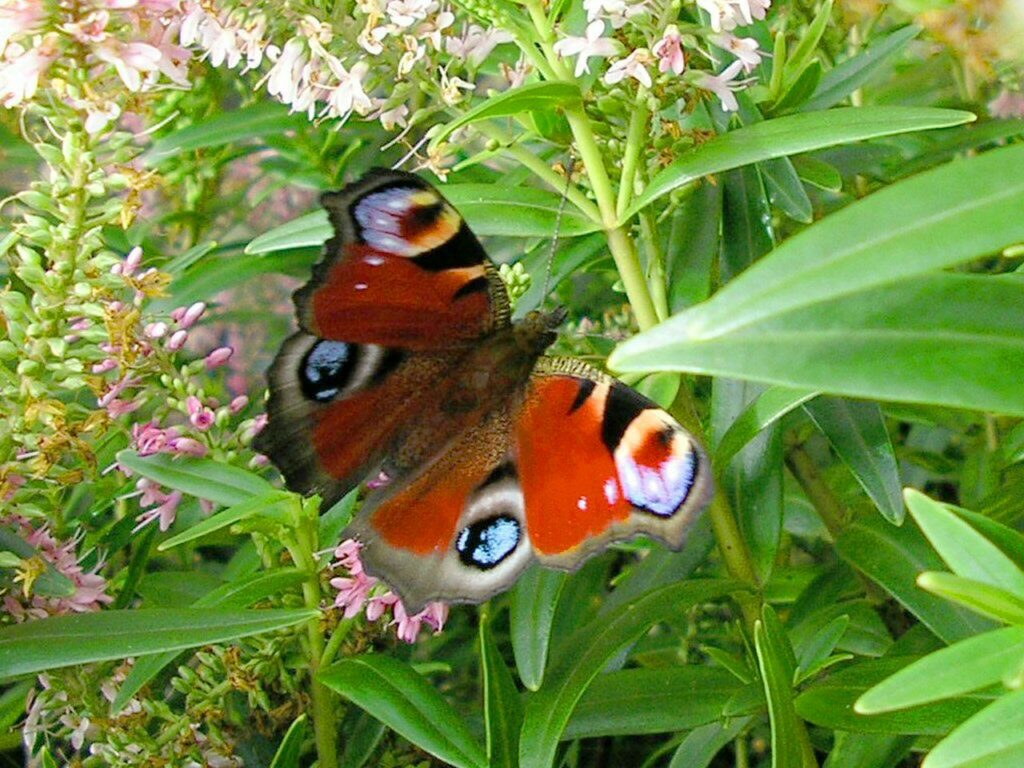
Summer is in full swing here in the UK, and we’ve already passed the longest day of the year. The gardens and parks are full of colourful flowers and bushes, and the insects, particularly bees and butterflies, are busy visiting those attractive blooms.
One of the most common butterflies seen in Britain is the beautiful peacock in today’s photo, so named because of the “eyes” on its wings, just like the “eyes” on a peacock’s feathers. These colourful insects can often be seen on bushes like buddleia, whose nickname is “the butterfly bush”, or hebe, as in the photo here.
Fun fact: If a peacock is threatened, it will make a hissing sound by rubbing the veins of its forewings and hindwings together. (Thanks to the Woodland Trust for this bit of info.)
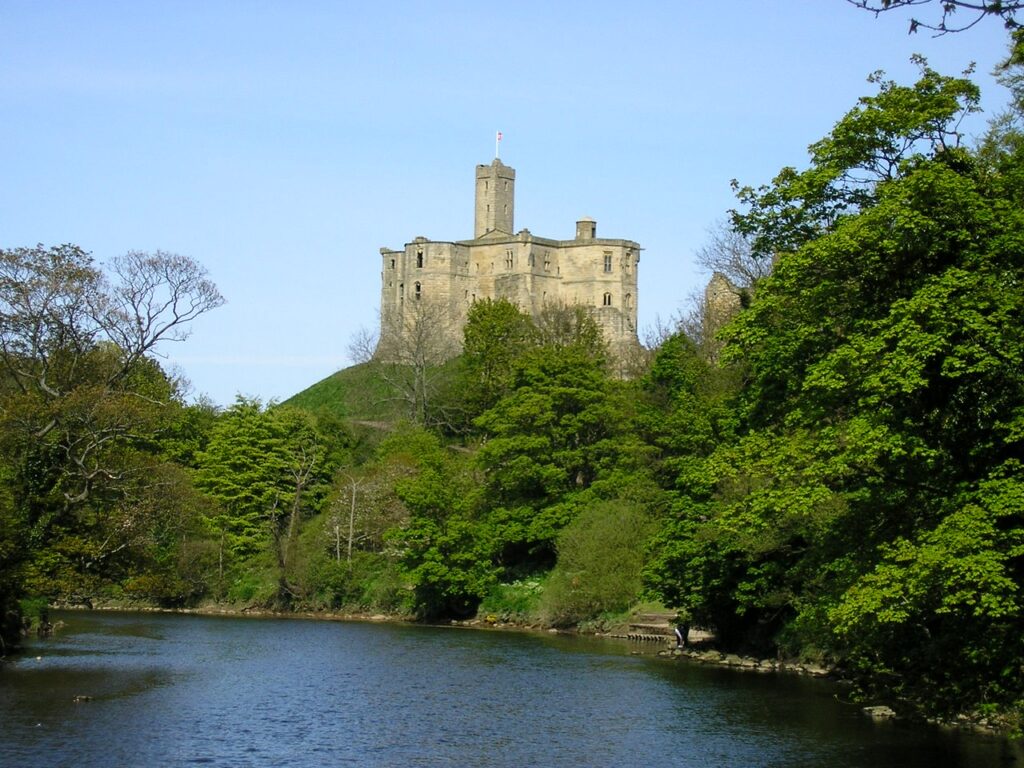
One of the many appeals to tourists who visit Britain is the abundance of beautiful and interesting old buildings scattered around the country. Not least of these are the impressive castles, some still inhabited and some ruined, which each come with their own fascinating stories and place in history.
The building of castles as we know them today began with the arrival of the Normans in the eleventh century. The fortified buildings started popping up all around the country and were used as bases from which the new arrivals could subjugate the populace. As time went on, castles were used as more than just seats of rule and became the homes of rich and noble families. Bigger buildings with more comfortable rooms were dwellings for large households, including servants and family members. And over the centuries, castles were also used in times of war.
Today there are still some, of course, which are used as homes, such as the royal residence at Windsor Castle. However, many, including a large number that stand in ruins, now serve as wonderful tourist attractions, such as Warkworth Castle, Northumberland, in today’s picture.
Fun fact: England alone (never mind the rest of the UK) is home to around 1,500 castle sites, so wherever you go in the country, you’ll nearly always be in reach of a castle to visit.
Thanks to English Heritage and famouscastles.net for some of the information in this post.
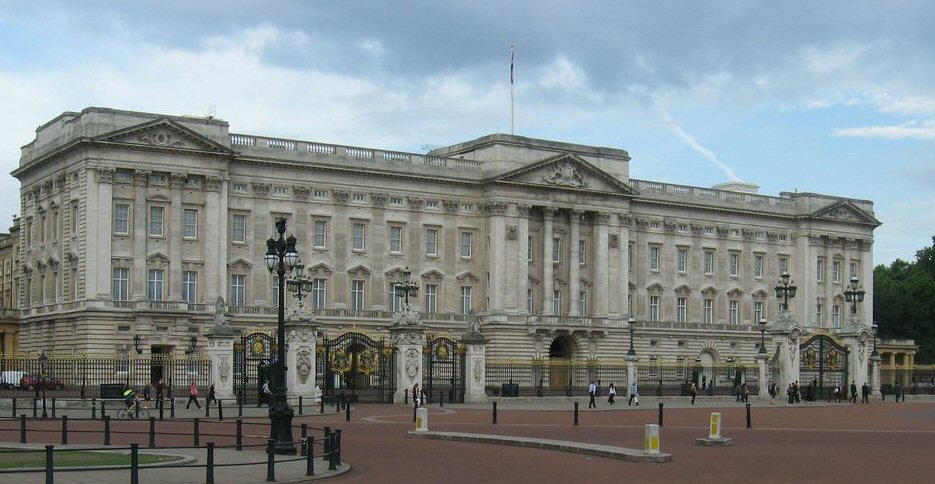
This weekend, with it being the second Saturday in June, the Trooping of the Colour and the King’s Birthday Parade take place. The procession starts from the building in the picture above, Buckingham Palace, surely one of the most famous “homes” in the world. The official residence of the British monarch since the accession of Queen Victoria in 1837, its current incumbent is King Charles III.
The palace took its name from its original inhabitant, the Duke of Buckingham and Normanby, for whom it was built in 1703. Initially known as Buckingham House, it became a palace once Victoria, a reigning monarch, took up residence.
Many official and ceremonial events take place within the palace’s walls, but the part of the building best known to the public must surely be the famous balcony behind the columns at the centre of the front façade. In 1851, Queen Victoria was the first to make a public appearance there, unwittingly starting a tradition. It is on the balcony that newly married royal couples wave to the public, the monarch greets their subjects on coronation day, and the royal family appear during times of national celebration, all to the cheers of the thousands of visitors who pack the area in front of the building. Buckingham Palace and a sighting of members of the royal family is surely on the bucket list of many visitors to London.
Fun stats: The palace has 775 rooms, including 19 state rooms and 52 royal and guest rooms, as well as 188 staff bedrooms, 92 offices, and 78 bathrooms. It also has 760 windows, 1,514 doors, and over 350 clocks and watches. No wonder it’s reported that there are about 800 cleaners on staff, although only around 30-40 work every day.
Thanks to Wikipedia for historical information and Tootbus for the fun facts. You can find out more about visiting the palace here.
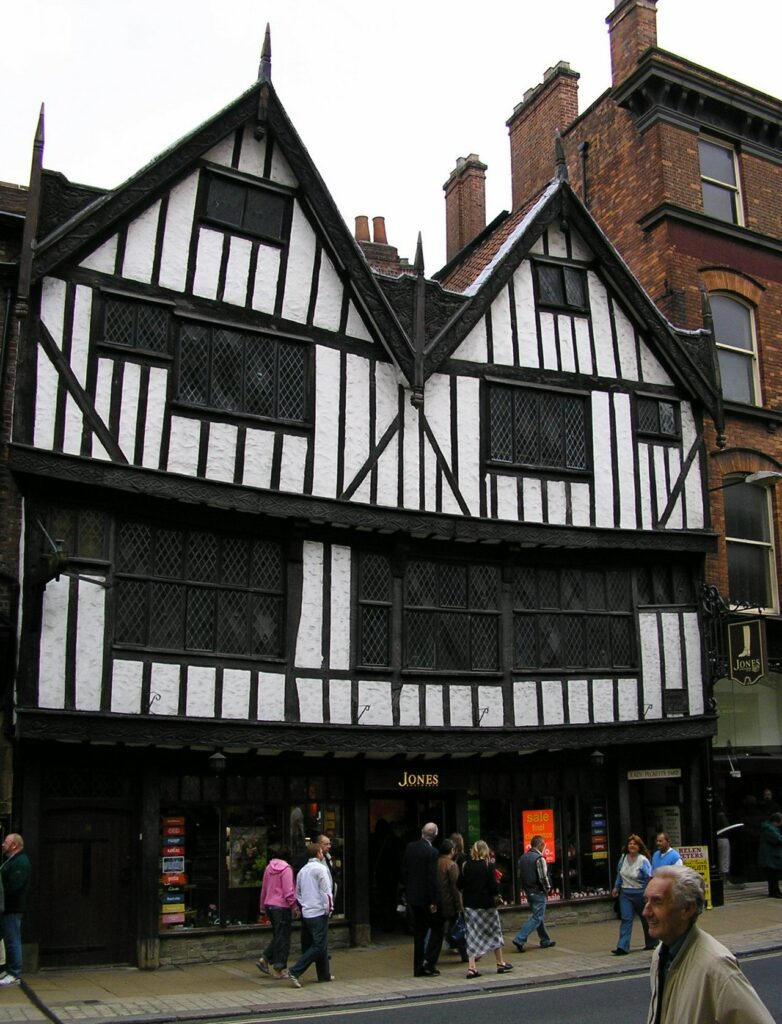
One of the aspects of Britain that many visitors from elsewhere in the world find fascinating is the number of old buildings that can be seen around the country. Nearly every town, city, and village has something to offer in the area of architecture from centuries past. Today’s post takes us to the historic city of York, famous for its minster cathedral among other things, although that’s not what you can see in our photo, of course.
The beautiful black-and-white-fronted Tudor building is Herbert House, named after its early inhabitants, the wealthy Herbert family. The house was built in around 1545, towards the end of the reign of the famous (or should that be infamous?) King Henry VIII. It features the classic half timber of the Tudor style, as well as the lattice-work windows that help to make buildings of this era so recognizable. The frontage of this particular example is bowed and looks like it might collapse at any moment; however, the building was underpinned in the 1980s, so neither it nor the public are in danger.
Fun fact: The Herbert family were highflyers in their day, producing more than one Lord Mayor of York, as well as being wealthy merchants. The most famous of them, Thomas Herbert, was a courtier close to the doomed King Charles I. It was he who kept the king company on his journey to be executed in January 1949.
Thanks to The York Conservation Trust for much of the information in this post.

As a fairly small island nation, Britain has a strong seafaring past and continues to have a well-respected navy, one that was established as an official entity by King Henry VIII in 1546. Fast forward just over 300 years and the “technological marvel” in today’s picture was launched. In 1860 HMS Warrior was the world’s first iron-hulled warship and was larger, faster, and more heavily armoured than any warship that had come before her. Sadly her fame and service didn’t last long, and in 1875 she was placed in reserve before being paid off in 1883.
Warrior’s slide from glory was complete when in 1927 she became an oil jetty. However, her fortunes were renewed in 1979 when she was donated to The Maritime Trust for restoration, and she can now be seen at Portsmouth Historic Dockyard. She has been lovingly restored to her former glory and gives visitors a glimpse into what life was like in the Victorian navy.
Fun Fact: In 1863 Warrior spent twelve weeks travelling around the UK, calling at different ports to allow members of the public to come aboard and see this wonderful new breed of warship. During that time around 300,000 visitors set foot on her decks, including as many as 13,000 a day when she was in port.
Thanks to Wikipedia and The National Museum of the Royal Navy for facts and figures.
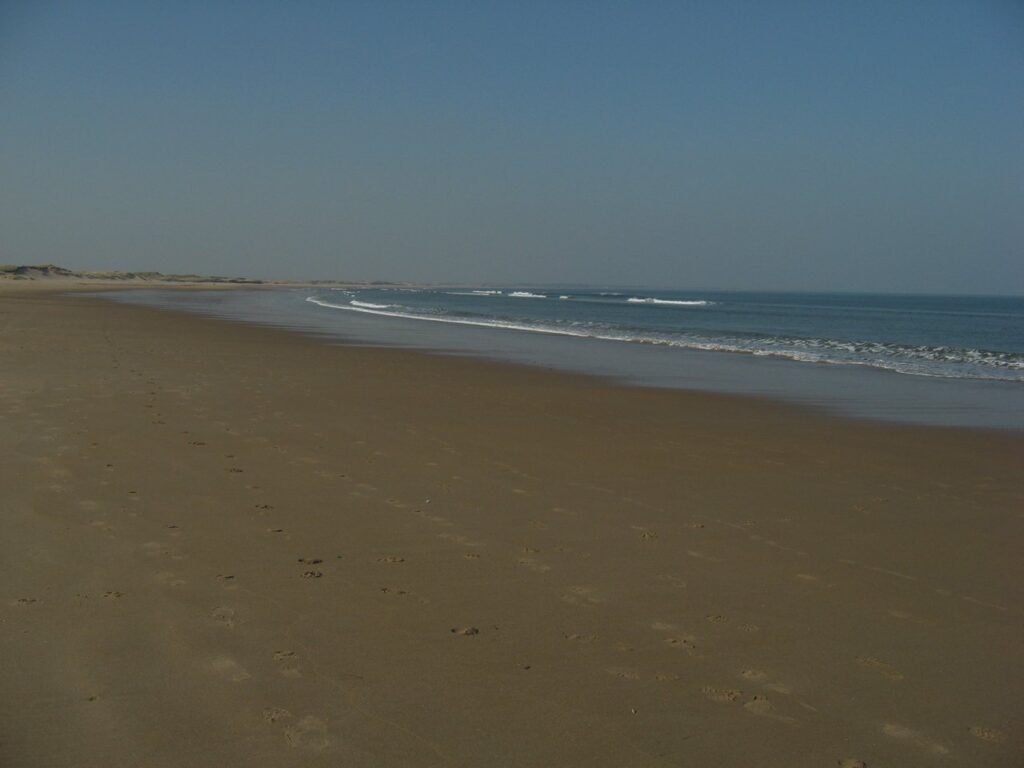
With warm, sunny days having arrived in the UK, more people are heading to the beach as an enjoyable place to spend time outdoors and soak up the sunshine. As an island, Britain is surrounded by water, with the North Sea to the north-east and east, the English Channel to the south, the Irish sea to the west of England and Wales, and the Atlantic Ocean to the west of Scotland. The coastline is as varied as the British countryside and includes some beautiful sandy beaches (like Druridge Bay in today’s picture), shingle/pebble beaches, and cliffs and rocky shoreline. There is something for everyone at the British coast.
You may not wish to take a dip in the sea for much of the year though, unless you’re a very hardy soul, as the water remains quite cold around much of the country, even during the summer months. According to The Beach Guide, the average maximum sea temperature anywhere at any time of year is just 17.4°C (63.3°F). The warmest water – and the hottest weather – is to be found on the south coast, and it’s for this reason that many parts of the south of England see a huge influx of holidaymakers during the summer.
Fun fact: Great Britain is not a very large island, so nobody lives further than 70 miles (113 kilometres) from the sea. According to the Office of National Statistics, in 2020 over 5.9 million people in England and Wales lived in a coastal town, about eight percent of the population at that time.
PS If you’d like to visit beautiful Druridge Bay – or many other beaches in the UK and around the world – you can check out tide times, the high & low tide table, fishing forecasts and weather and water temperatures at tideschart.com.
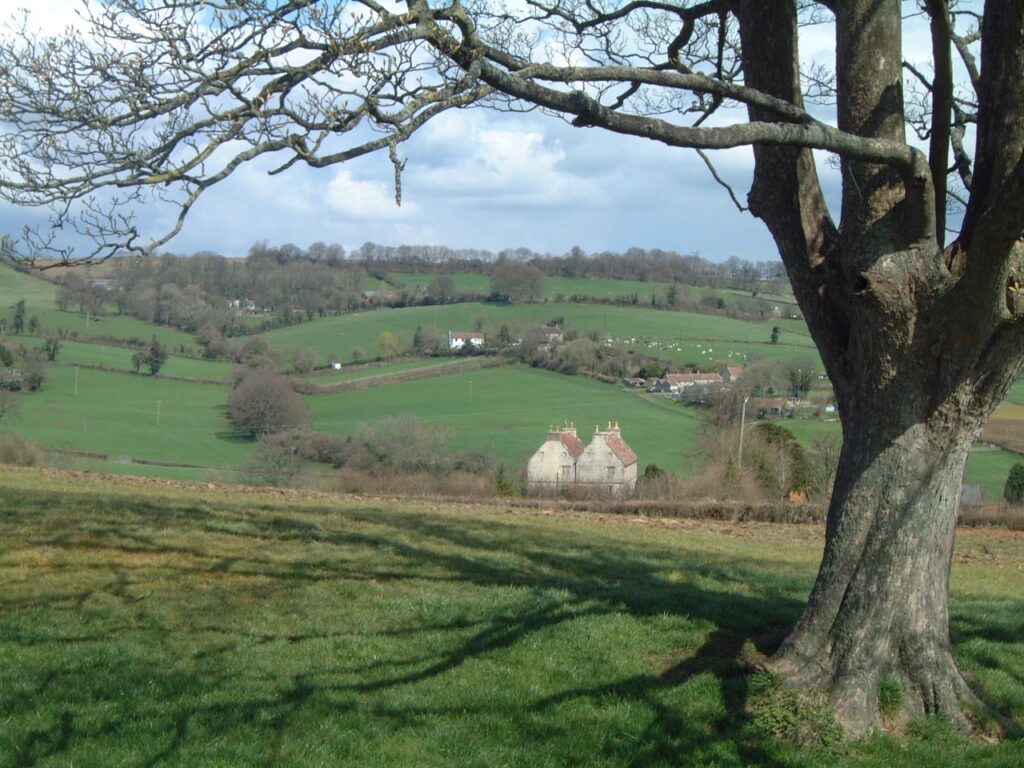
William Blake’s poem “And did those feet in ancient time”, now probably best known as the hymn “Jerusalem”, refers to “England’s green and pleasant land”. Much of England is very green, and wherever you go, the countryside is pleasing to the eye. Gnarly trees, green fields, sheep and cattle, old stone farmhouses: these and more are all elements of what makes England an appealing country to travel around. Each county provides something slightly different in terms of flora and fauna, agriculture, and architecture. And much of it has remained largely unchanged for decades or centuries and has plenty of fascinating history to go with it.
Fun fact: The claim to fame of the seventeenth-century manor house in today’s picture, Rugbourne Farm, is that it was dubbed “the birthplace of English geology” by William Smith, who stayed there in the 1790s. Smith himself is known as “the Father of English Geology”, and it was while he was living at Rugbourne that he started work on the first ever stratological map of Britain, a print of which can be viewed in the manor house.
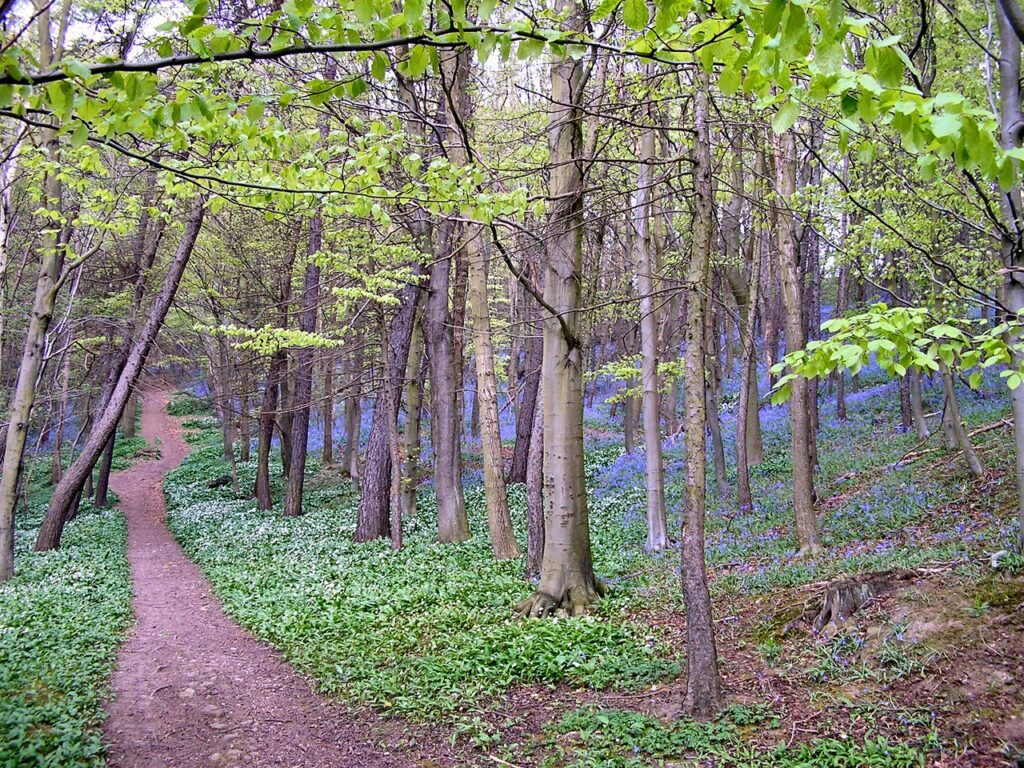
A month ago, spring was just beginning to spring and we were admiring the primroses. Now we’re well into a favourite season of many British countryside lovers: bluebell season. These pretty little flowers pop up in woodland, often in mass carpets like the ones in today’s picture, creating a feast for the eyes. The native English bluebell has a distinctive scent, so a walk in a wood full of them is an immersive experience for multiple senses, especially as you’re likely to hear birds singing in the trees as well.
Fun fact: It’s no wonder that the bluebell is thought of as a quintessentially British flower: almost half the world’s bluebells are found in the UK, and the flower is actually quite rare anywhere else. In order to protect these British beauties, it’s against the law to intentionally pick, uproot, or destroy them. (Thanks to The National Trust for this fun fact information.)